Close



Article written by Samantha Lim, Senior Marketing Executive
Gen Z doesn't listen to ads. They listen to each other.
That might sound like an oversimplification, but it captures a much bigger shift happening in the way people discover, evaluate and buy brands. For Gen Z, influence doesn't necessarily come from a billboard, a celebrity endorsement or a perfectly polished campaign. It can come from a creator they've followed for years, a comment underneath a TikTok, a Reddit thread, an unboxing video or a friend casually saying, "You need to try this."
And that's what makes Gen Z consumer behaviour such an interesting subject. They aren't simply changing what people buy. They're changing how influence works.
Born into a world of smartphones, social media and constant connectivity, Gen Z has grown up surrounded by marketing. They know what an ad looks like, they know when a brand is trying too hard and they can tell when something feels manufactured. But this doesn't mean they're disengaged from brands. Quite the opposite. They care deeply about what brands represent, how they fit into their identity and whether they feel authentic.
For marketers, this means the old playbook is starting to look a little outdated. Big campaigns and polished brand promises still have their place, but they aren't enough on their own. Marketing to Gen Z means brands need to understand the communities, creators and cultural conversations that they actually pays attention to.
Traditional advertising often works on the assumption that brands control the message and consumers receive it. Gen Z has made that relationship a lot messier.
A brand can tell you its product is great, but Gen Z is likely to look for confirmation somewhere else. What are people saying in the comments? Has anyone reviewed it? What does their favourite creator think? Is anyone actually using it? Is there a Reddit thread about it? What happens when they search for it on TikTok?
This is where peer validation becomes so powerful.
Deloitte's 2025 Digital Media Trends found that 63% of Gen Z respondents consider social media ads or product reviews influential to their purchasing decisions, while 52% say they feel a stronger personal connection to social media creators than to TV personalities or actors. It’s a clear signal of how Gen Z purchasing behaviour has shifted toward peer trust over brand messaging.
The influencer economy also looks different when Gen Z is the audience. This generation grew up alongside creators and has watched them evolve over years, creating a familiarity that traditional celebrity endorsements can struggle to replicate. A creator recommending a product can feel less like an advertisement and more like someone putting their audience onto something they genuinely enjoy.
And relatability matters. Deloitte's research into the creator economy found that consumers are more likely to purchase products recommended by creators they identify with, showing that the person delivering the message can be almost as important as the message itself.
This doesn't mean brands should stop advertising. It means they need to stop thinking that advertising is the only way to influence people.
The better question is: What can we create that people will want to talk about without being asked to?
A product worth showing off, an experience worth sharing or a campaign people actually want to participate in can travel much further than a perfectly scripted brand message.
For years, the design world had a bit of a love affair with minimalism. Clean layouts, muted colours, simple logos and carefully curated feeds became the visual language of modern brands.
But Gen Z has grown up in a much noisier cultural environment.
From K-pop fandoms and gaming communities to Pinterest, TikTok and niche internet aesthetics, this generation is constantly surrounded by different visual languages and subcultures. They don't necessarily want everything to look clean and consistent. They want it to feel personal.
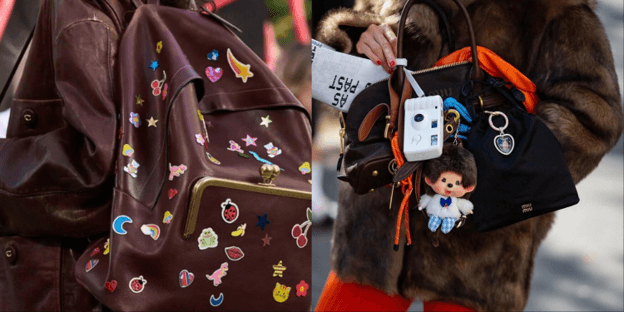
That's why customisation has become such a powerful part of youth culture. Stickers on laptops, charms on bags, personalised phone cases, custom sneakers, digital avatars and highly individual aesthetics are all ways of saying, "This is mine."
For Gen Z, personalisation isn't just about getting a recommendation that happens to be relevant. It's about feeling like a brand understands what makes them different, whether that's through a customised product, a tailored experience or simply giving them room to make something their own.
The takeaway isn't that minimalism is dead or that every brand suddenly needs to become maximalist. It's that consumers increasingly want room to express themselves.
A product doesn't have to be completely redesigned for every individual. Sometimes it's about giving people something to customise, remix, collect or interpret in their own way.
The more room a brand gives people to make something their own, the more ownership they can feel towards it.
And when consumers start putting their own identity into a brand, they're no longer just customers. They're helping shape the brand itself.
Then there's the way brands talk.
Gen Z has become extremely good at recognising when a brand is trying to sound like a person and when it actually has a personality.
A caption that feels like it went through three rounds of approvals before someone reluctantly added a "😂" isn't going to suddenly feel relatable because it uses the right slang.
This is where self-awareness, humour and a genuinely distinct brand voice can make a difference. Brands that understand how people communicate on social media can participate in conversations without feeling like they're forcing themselves into them.
But there's an important distinction here.
The goal isn't to throw Gen Z slang into every caption or make every brand account "unhinged". That's already becoming its own formula.
The goal is to be human.
Sometimes that means being funny. Sometimes it means admitting when something didn't go to plan. Sometimes it means responding to a comment like an actual person rather than issuing a corporate statement. And sometimes it simply means saying what you mean without dressing it up in five layers of marketing language.
This matters because authenticity is becoming a baseline expectation. YouGov's APAC Gen Z research found that almost nine in ten Gen Z respondents have stopped buying from a brand after losing trust, highlighting just how quickly credibility can affect consumer behaviour.
So if the brand voice feels fake, the problem isn't that Gen Z doesn't understand your joke. It's that they can tell you're trying to manufacture a connection.
Perhaps the biggest shift is that Gen Z doesn't see themselves as passive consumers.
They remix trends, create memes, turn products into content, build fandoms, start conversations and influence what becomes culturally relevant. A trend can start with a handful of users and become a global phenomenon within days, while a campaign with millions in media spend can disappear just as quickly if people don't find a reason to care.
This is why participation matters so much.
The strongest Gen Z marketing doesn't always give people something to watch. It gives them something to do.
Create your own version. Vote for your favourite. Customise it. Duet it. Remix it. Comment on it. Turn it into a meme. Tell us your story.
The format can change, but the principle stays the same: give people an opportunity to become part of the idea.
When consumers start creating around a brand, the brand becomes bigger than its advertising.
Marketing to Gen Z isn't about trying to become younger. It's about understanding how culture moves.
Influence has shifted from brands to communities. Products have become tools for self-expression. Creators have become trusted sources of discovery. And social platforms have blurred the line between consumer, creator and participant.
The brands that understand this won't necessarily be the ones shouting the loudest. They'll be the ones that know when to speak, when to listen and when to let their audience take the conversation somewhere unexpected.
Most importantly, they won't try too hard to "market to Gen Z".
They'll give Gen Z something worth talking about.
Because the most influential consumer group today doesn't just consume culture.
They help decide what culture looks like next.
Want your brand to speak Gen Z's language without losing your own? Let's build Gen Z marketing strategies that work — get in touch with Kingdom Digital.
References
2025 Digital Media Trends: Social platforms are becoming a dominant force in media and entertainment. https://www.deloitte.com/us/en/insights/industry/technology/digital-media-trends-consumption-habits-survey/2025.html


June 19, 2025

March 20, 2026
September 9, 2026

 Thank you for your enquiry! We'll respond shortly.